lou's web corner.png)
lou's web corner
return |
 | Trilobites were marine arthropods that lived during the Cambrian Period and went extinct 250 million years ago. They posessed an exoskeleton whose structure allowed them to roll into a ball to protect themselves from danger by covering their soft body parts. They could also moult their exoskeletons, leaving them behind, which would later become fragmented fossilized remains. They were very varied in size and shape - some of them were blind, others were as small as 3cm long while others could even reach 60cm, and some of them habited deep waters and surface waters. |
 | Nautilus pompilius are cephalopod mollusks whose shells form a near-perfect logarithmic spiral, and it can exhibit countershading, which allows it to blend in with the darkness of the sea when seen from above, and when seen from below, it blends in with the light coming from above. They can survive in very deep waters reaching 700mts, although they can be found near the surface during the night. They were once thought to be living fossils, but this has been disproved. All nautilus species are currently threatened due to overfishing for their shell, mainly used for jewelry and ornamental objects. |
 | Rhinoceros beetles are herviborous invertebrate insects that are characteristically recognized for the males' horn-like projections on their heads. They are also very strong, with adults of some species being able to lift objects 30 times their own weight without sacrificing any speed, and some even reach 100 times - which is why they're also called the Hercules beetle. They can grow up to 15cm, which makes them some of the largest beetles in the world. Did you know that they can "hiss" by rubbing its abdomen and wings together? |
 | Axolotls, named after the Aztec god Xolotl, are carnivorous amphibians characterized by their external gills and their interesting qualities, such as being able to camouflage, keeping themselves "young" due to their epigenetic clock stopping at 4 years old, and the incredible abiity to regenerate their limbs, their heart, and even parts of their brain — and also process limb and organ transplants very well — without leaving any scars. They are currently heavily endangered due to factors such as habitat degradation, contamination, fishing, non-native predators and pet trade. |
 | Cubaris is a genus of woodlice and there are more than 100 described species in the genus Cubaris. They thrive in moist environments that contain hiding spots, and their diet mostly consists of decomposing organic matter, such as dried leaves and wood — although they can be offered fruits and vegetables. They undergo several molts before reaching adulthood and have the ability to curl up into a ball. Isopods as a whole are highly understudied in comparison to other invertebrates, which can result in incorrect identifications and Cubaris are no exception of this. On a side note, the pet isopod hobby has largely incremented due to the Cubaris sp. "Rubber Ducky", which is the species on the left image. |
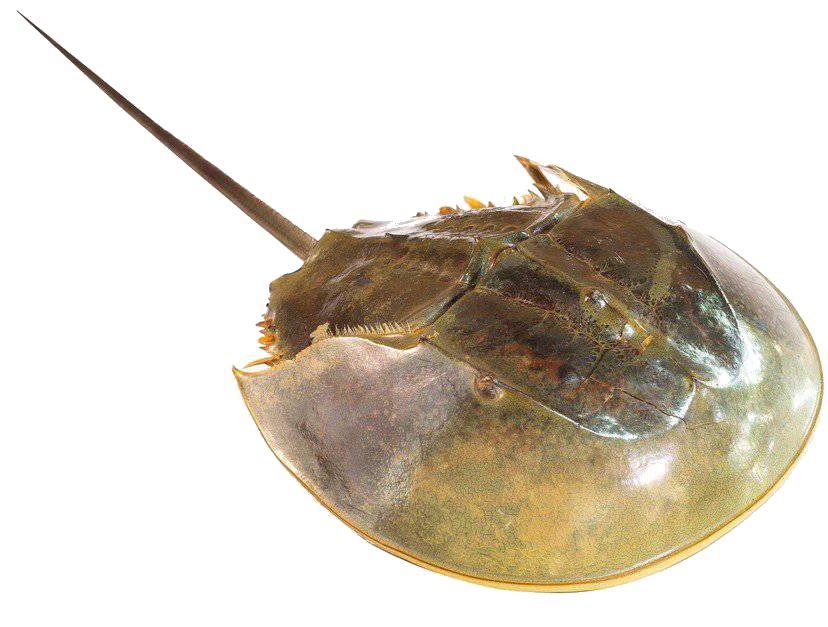 | Horseshoe crabs, described as "living fossils", are arthropods and the only surviving xiphosurans — which means they're not crabs (or even crustaceans!) they are chelicerates, and this makes them more closely related to arachnids. Most of them are marine and primarily live at the benthic zone (a.k.a. "water's bottom") but they can swim if needed. They're often caught for their blood which contains a chemical used to detect bacterial endotoxins, and are also used as fishing bait in the United States. Horseshoe crabs have experienced a population decline in recent years, mainly due to habitat destruction and overharvesting. |